42" dog crate
Right-sized for a large dog, cozy not cramped.
View pick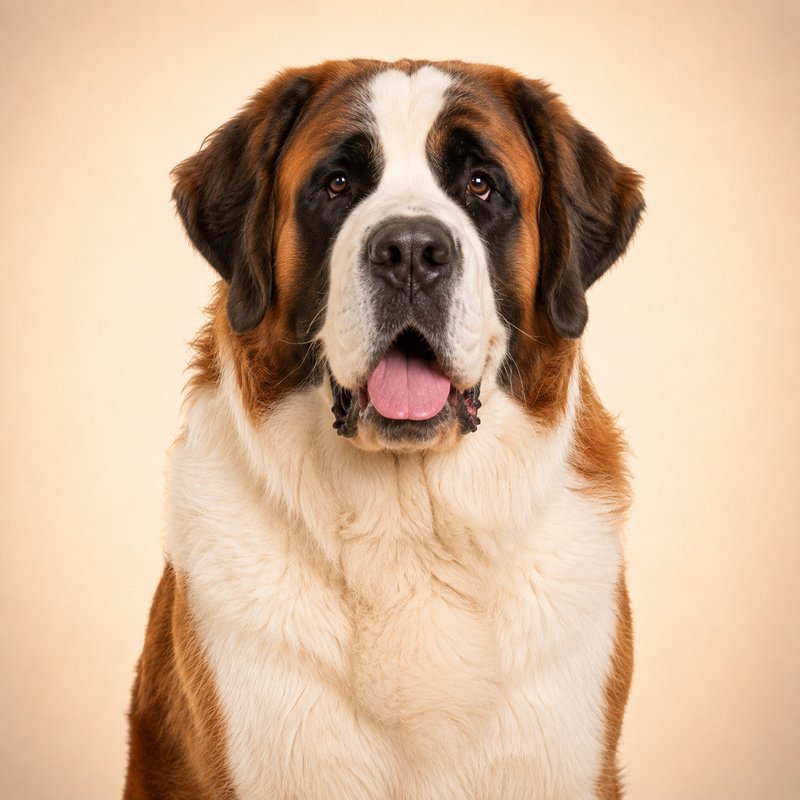
The gentle giant of the Alps
The Saint Bernard is a giant, powerful working dog famed for its calm, affectionate nature and its history of alpine rescue. Despite its imposing size, it is patient and gentle, making it a devoted family companion that is especially tolerant of children.
Bred by monks at the Great St Bernard Hospice in the Swiss Alps from the 17th century, these dogs guarded the pass and searched for travelers lost in the snow. They became legendary mountain rescuers, with one dog named Barry credited with saving dozens of lives.
Start socialization and obedience early while the puppy is still manageable in size, as an adult is too large to correct by force. They are intelligent but can be stubborn, so use patient, consistent, reward-based methods.
Both short-haired and long-haired coats shed heavily, so brush several times a week and daily during seasonal shedding. Expect regular drool wiping and routine ear and eye checks.
Feed a large-breed diet in measured portions to avoid rapid growth and obesity. Splitting meals into two servings helps reduce the risk of bloat.
Moderate daily walks and gentle play are enough, as this is a low to moderate energy breed. Avoid strenuous activity in young puppies and in hot conditions.
Common concerns include hip and elbow dysplasia, bloat (gastric torsion), heart conditions like dilated cardiomyopathy, and eye problems such as entropion and ectropion.
Fun fact. The famous brandy barrel worn around the neck is a myth popularized by art and film, not an actual rescue tool the monks used.
A few breed-right basics for a new Saint Bernard.
Right-sized for a large dog, cozy not cramped.
View pickJoint support, sized to a large frame.
View pickTames heavy shedding fast.
View pickJoint and growth support for big dogs.
View pickThese are affiliate links. We may earn a commission at no extra cost to you. It never changes what we recommend.